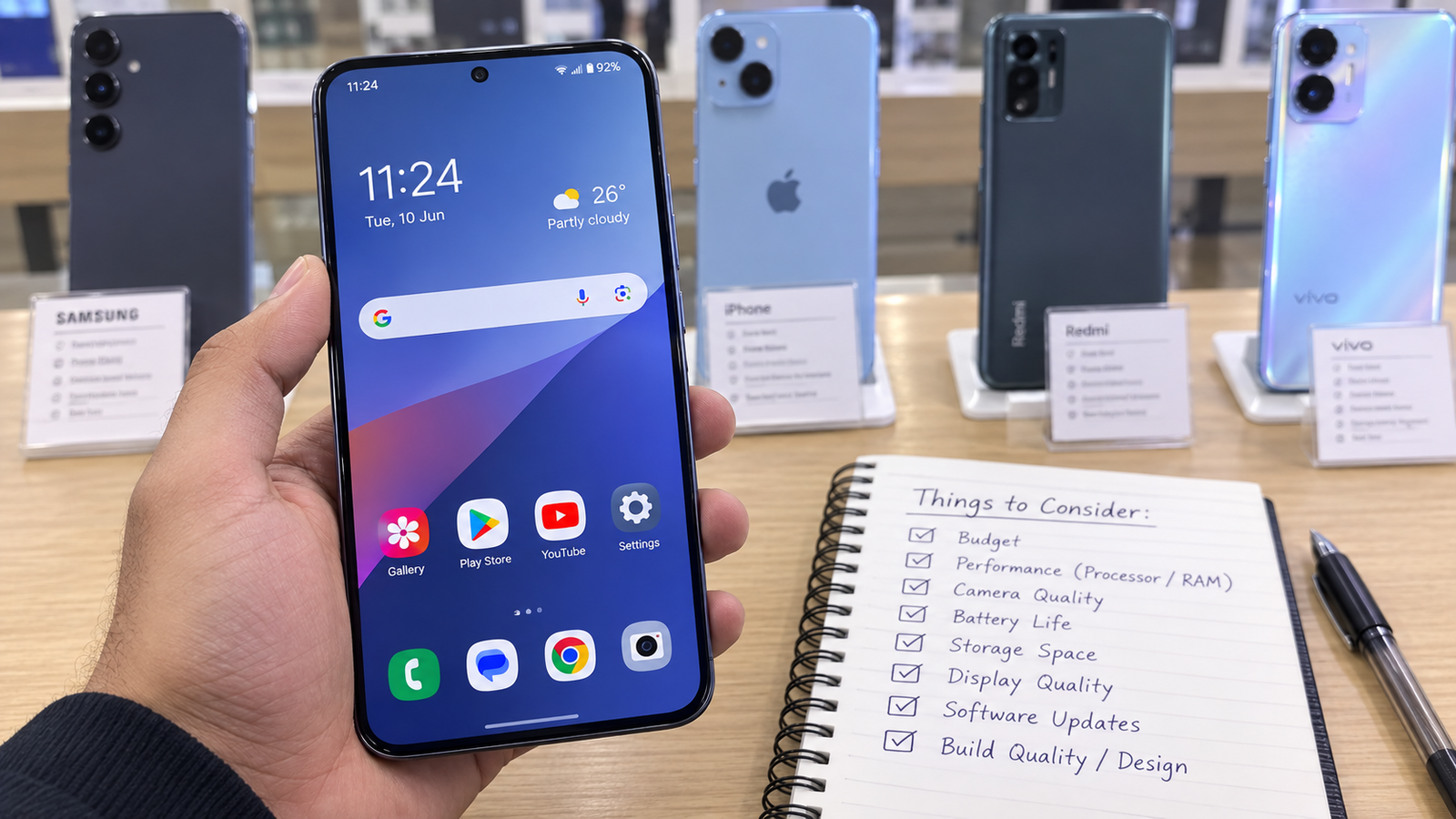
Choosing the right smartphone can feel confusing because there are so many phones available today. Every brand offers different features, prices, camera systems, battery sizes, and performance levels. Some smartphones are made for gaming, while others are better for photography, business, social media, or everyday use. Buying the most expensive phone does not always mean you are getting the best phone for your needs.
The best smartphone is the one that fits your daily activities, budget, and personal preferences. Before buying a new phone, it is important to understand what you actually need. In this guide, we will discuss the most important things to consider when choosing the right smartphone.
Understand Your Smartphone Needs
The first step in choosing the right smartphone is understanding how you plan to use it. Think about what you normally do on your phone every day. Do you mainly make calls, send messages, browse websites, and use social media? Or do you play games, take many photos, watch videos, and use demanding applications?
If you only need a phone for basic tasks, you do not need to spend a large amount of money. A reasonably priced smartphone can easily handle calls, messages, social media, video streaming, and web browsing.
If you use your smartphone for work, photography, gaming, or content creation, you may need a more powerful device. Understanding your smartphone needs can help you avoid paying for features that you will never use.
Set a Realistic Budget
Your budget is one of the most important factors when buying a smartphone. Smartphones are available in many different price ranges, from affordable models to premium flagship devices.
Before looking at different phones, decide how much you are comfortable spending. Having a clear budget makes the buying process easier because you can focus on phones that are actually affordable for you.
An expensive smartphone may have better cameras, a faster processor, and a premium design, but these features may not be necessary for everyone. Many affordable and mid range smartphones offer excellent performance for everyday tasks.
It is also a good idea to think about long term value. A slightly more expensive phone with better software support, stronger hardware, and good battery life may provide better value over several years.
Choose the Right Operating System
The operating system is another important thing to consider when choosing a smartphone. The two main smartphone operating systems are Android and iOS.
Android phones are available from many different brands and come in a wide range of prices. Android also provides many customization options and allows users to choose from different designs, screen sizes, cameras, and hardware features.
iPhones use Apple’s iOS operating system. iOS is known for its simple interface, smooth performance, strong privacy features, and integration with other Apple devices.
Your choice may also depend on the devices you already own. If you already use products from a particular ecosystem, staying with the same platform may make things more convenient.
Consider Smartphone Performance
Performance matters if you want your phone to feel fast and responsive. A smartphone processor affects how quickly applications open, how smoothly games run, and how well the phone handles multiple tasks.
For normal activities such as browsing, messaging, watching videos, and using social media, you do not necessarily need the most powerful processor.
However, gamers and people who use demanding applications should look for a smartphone with a strong processor and enough RAM. A good processor can also help a phone remain useful for a longer period.
RAM is another specification worth checking. More RAM can help when you are switching between several applications. For most everyday users, a moderate amount of RAM is enough, while heavy users may benefit from more.
Check the Display Quality
The display is one of the parts of a smartphone that you will use the most. A good screen can make watching videos, reading articles, browsing social media, and playing games much more enjoyable.
When comparing smartphones, look at the screen size, resolution, brightness, and refresh rate.
A larger display can be useful for watching videos and working on documents. A smaller display may be easier to hold and carry.
The refresh rate can also affect how smooth scrolling feels. Higher refresh rates can provide smoother movement on the screen, which can be useful for gaming and everyday navigation.
If you often use your phone outside, screen brightness is especially important. A bright display can make it easier to see content in strong sunlight.
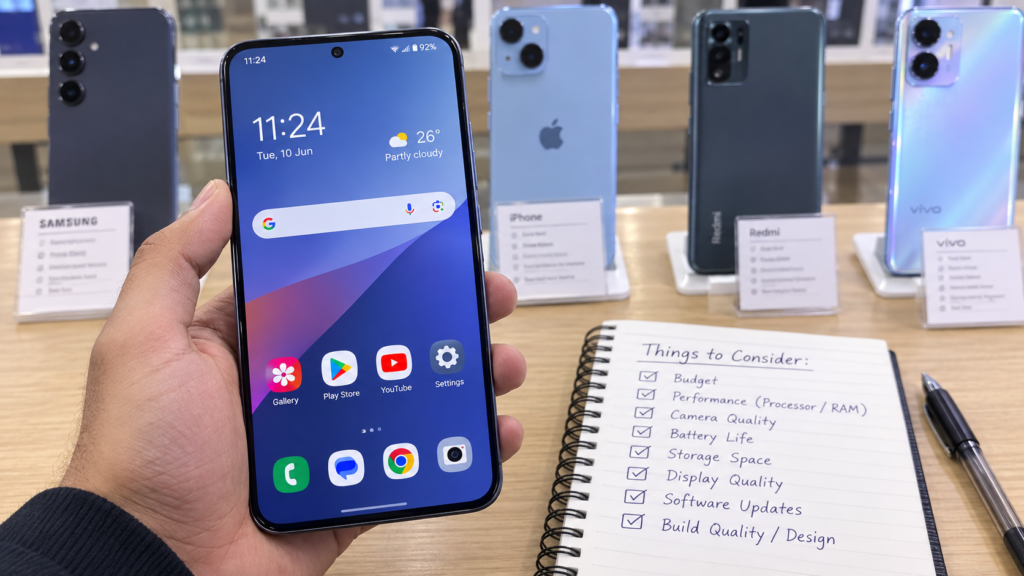
Look at the Camera Features
Many people consider camera quality one of the most important smartphone features. However, choosing a camera based only on the number of megapixels is not always a good idea.
Camera quality depends on several factors, including the image sensor, software processing, lens quality, stabilization, and lighting performance.
If you enjoy taking photos, look at sample images and consider how the camera performs in different conditions. A good smartphone camera should produce clear and natural looking photos during both daylight and low light.
If you record videos, check video resolution, stabilization, and audio quality. People who create social media content may also want a smartphone with a strong front camera.
Pay Attention to Battery Life
Battery life can make a big difference in your daily smartphone experience. A phone with excellent performance is not very useful if its battery runs out quickly.
When choosing a smartphone, consider the battery capacity and how efficiently the phone uses power. Battery life also depends on your personal usage.
If you spend many hours watching videos, playing games, using GPS, or browsing social media, you may need a phone with strong battery performance.
Fast charging can also be useful. It allows you to quickly add battery power when you do not have much time to wait.
Think About Storage Space
Storage is another feature that should not be ignored. Your smartphone stores applications, photos, videos, documents, downloads, and other files.
If you take many photos and videos, you may need more storage. People who use their phones mainly for calls, messaging, and basic applications may not need as much.
It is better to choose enough storage for your expected usage instead of constantly deleting files to make space.
Before buying a phone, also check whether it supports expandable storage. Some smartphones allow users to add a memory card, while others do not.
Consider Build Quality and Design
The design of a smartphone is not only about appearance. Build quality can affect how long the phone lasts.
Look for a device that feels comfortable in your hand and is suitable for your lifestyle. If you frequently travel or work outdoors, durability may be more important than having a very thin phone.
Water and dust resistance can also provide extra protection. A strong build can help reduce the risk of damage from everyday accidents.
You should also consider the weight and size of the phone. A large phone may provide a better viewing experience, but it may not be comfortable for everyone to use with one hand.
Check Software Updates
Software support is an important part of choosing the right smartphone. Regular software updates can provide new features, security improvements, and bug fixes.
Before buying a phone, check how long the manufacturer plans to provide software and security updates. A phone that receives updates for several years can be a better long term investment.
Good software support can also help your smartphone remain secure and useful for a longer time.
Think About Connectivity
Modern smartphones offer many connectivity features. Depending on your needs, you may want support for fast mobile networks, WiFi, Bluetooth, and other wireless technologies.
If you travel frequently, check whether the phone supports the mobile network bands used in the countries you visit.
People who use wireless headphones, smart watches, or other accessories should also make sure the smartphone supports the connections they need.
Read Reviews Before Buying
Once you have selected a few smartphones, read reviews before making your final decision. Reviews can help you understand how a phone performs in real world situations.
Look for information about battery life, camera performance, software experience, heating, performance, and durability.
Do not depend on one review. Reading opinions from several reliable sources can give you a better idea of the phone’s strengths and weaknesses.
It can also be useful to watch real world camera samples and performance tests if these features are important to you.
Avoid Paying for Features You Do Not Need
One common mistake people make when buying smartphones is paying for features they will never use.
For example, a person who mainly uses messaging and social media may not need an expensive gaming processor. Someone who rarely takes photos may not need a professional level camera system.
Instead of choosing a phone because it has the longest list of specifications, focus on the features that are important to your daily life.
This approach can help you save money while still getting a smartphone that performs well.
Think About Long Term Use
A smartphone is often an investment that you expect to use for several years. Therefore, think beyond the first few weeks of ownership.
Consider battery health, software updates, storage, performance, repair options, and overall durability.
A phone that works well today but becomes slow after a short time may not be a good choice. A reliable smartphone with good long term support can provide better value.
Final Thoughts
Choosing the right smartphone does not have to be difficult. The key is to understand your personal needs before looking at different models. Start with your budget and decide how you will use the phone.
Pay attention to performance, display quality, camera features, battery life, storage, software updates, connectivity, and build quality. You should also read reviews and compare several options before making a final decision.
The best smartphone for you is not necessarily the most expensive or most powerful model. It is the smartphone that gives you the features you need at a price you can comfortably afford.
By taking some time to compare your options, you can choose a smartphone that fits your lifestyle, performs well, and remains useful for years to come.