Mobile internet has become an important part of everyday life. People use their phones to watch videos, attend online classes, work from home, use social media, play games, make video calls, and shop online. As the number of mobile users continues to grow, people also expect faster and more reliable internet connections. This is where 5G technology is making a big difference.
5G is the fifth generation of mobile network technology. It is designed to provide faster internet speeds, lower delay, better network performance, and support for a large number of connected devices. Compared with older mobile networks, 5G can make mobile internet feel much faster and more responsive. It is not only about downloading files quickly. It can also change the way people use smartphones, smart devices, online services, and connected technology.
What Is 5G Mobile Internet?
5G mobile internet is the latest generation of wireless network technology. Before 5G, people commonly used 3G and 4G networks for mobile internet. 4G made activities such as video streaming, online gaming, social media, and video calling much easier. 5G takes this experience further by offering higher speeds and lower latency in supported areas.
One of the main benefits of 5G is its ability to handle more data. Modern smartphones are constantly using internet connections for different tasks. A single phone may have several apps running in the background, while the user is also watching videos or browsing websites. 5G can provide the network capacity needed for these growing demands.
The actual 5G experience can be different depending on the location, network provider, smartphone, signal strength, and type of 5G technology being used. Even so, 5G is becoming an important part of the future of mobile internet.
Faster Mobile Internet Speeds
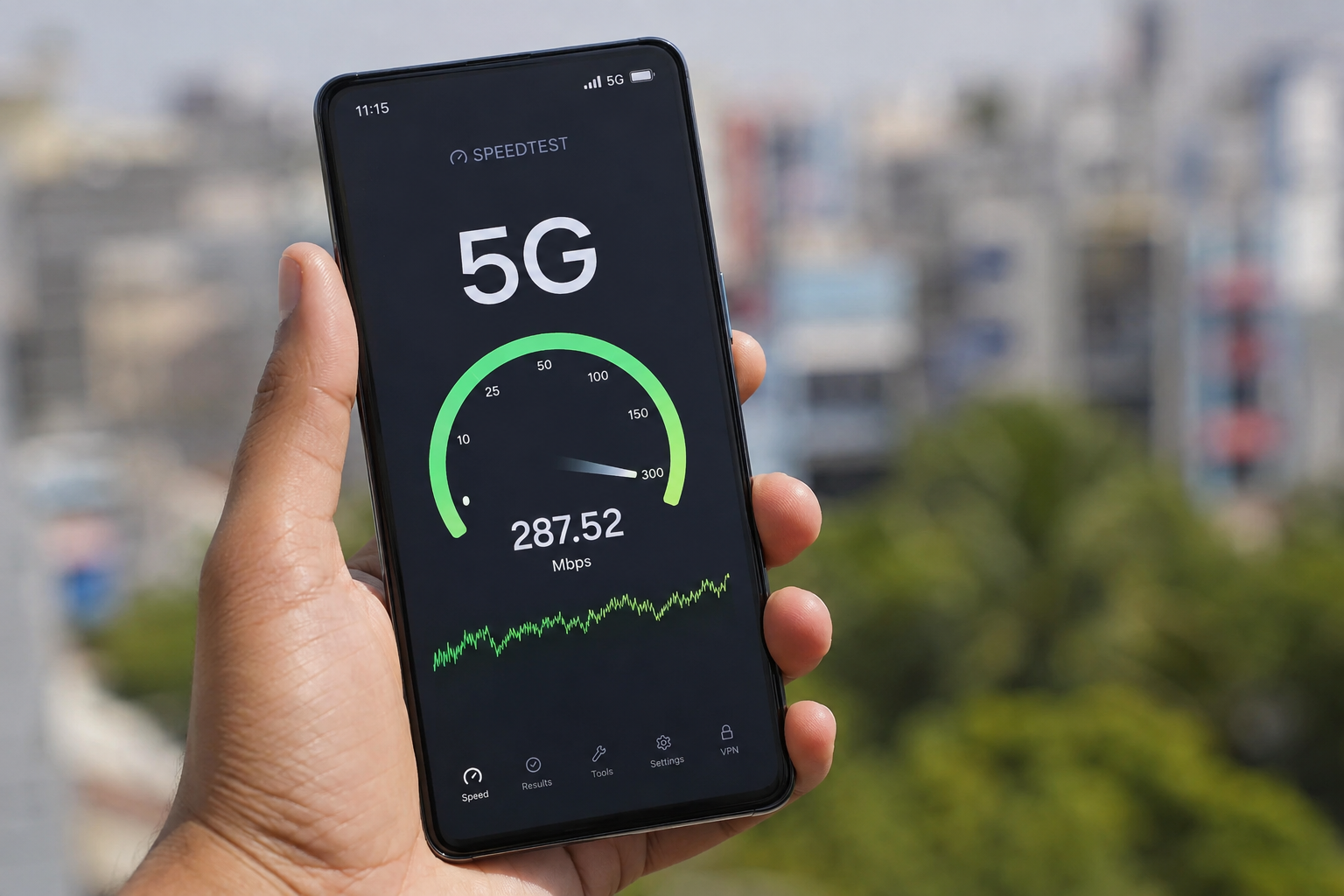
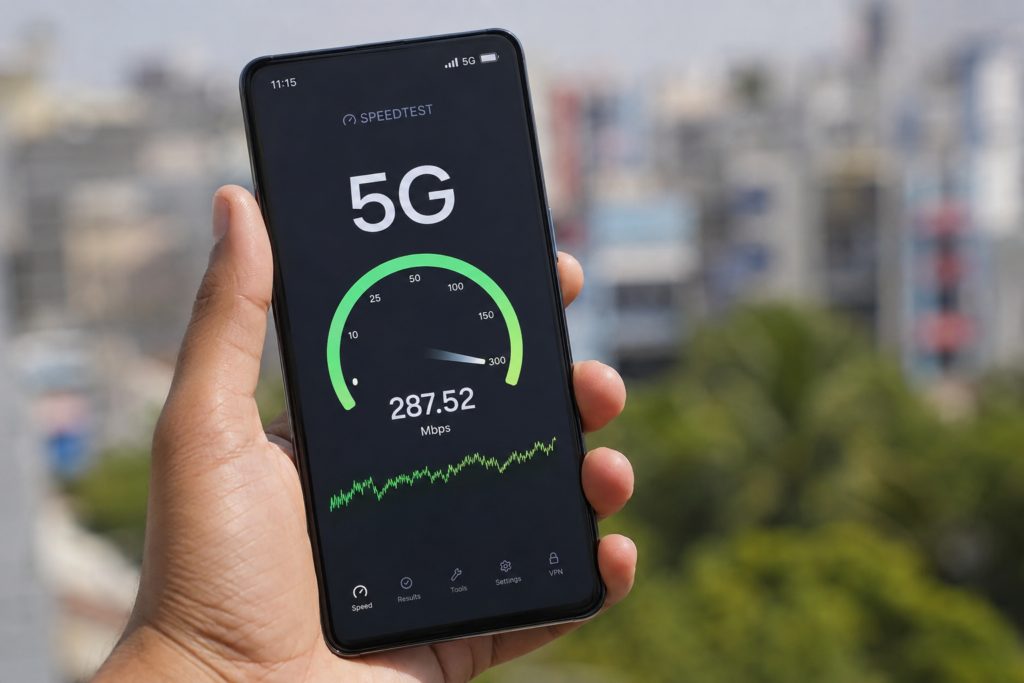
One of the biggest advantages of 5G is faster internet speed. With a strong 5G connection, users can download large files, applications, photos, and videos much faster than they could on many older mobile connections.
Fast internet is especially useful when watching high quality videos. Streaming platforms continue to offer better video quality, including high resolution content. A faster mobile network can help videos load quickly and reduce waiting time.
Faster speeds can also make software updates easier. Smartphone applications and operating system updates can sometimes be large. With a good 5G connection, these downloads can take less time.
However, users should remember that 5G speed is not always the same everywhere. Network traffic, coverage, distance from a cell tower, and the mobile plan can affect the final speed.
Lower Latency Makes Internet More Responsive
Speed is not the only important feature of 5G. Latency is another major factor. Latency refers to the time it takes for data to travel between a device and a network server.
Lower latency means a faster response between the user and the online service. This can be helpful for online gaming, video calls, cloud applications, and other activities that need quick communication.
For example, in online gaming, even a small delay can affect the experience. A lower latency connection can make controls feel more responsive. In video calls, lower delay can make conversations feel more natural because there is less waiting between speaking and hearing a response.
This is one reason why 5G is more than simply a faster version of mobile internet.
Better Video Streaming
Video streaming has become one of the most popular uses of mobile internet. People watch movies, television shows, short videos, live streams, and educational content on their smartphones.
5G can improve the streaming experience by providing faster connections and better network capacity. Users may be able to stream higher quality content with less buffering when network conditions are good.
This is especially useful when several people are using mobile networks in busy locations. Improved network capacity can help operators manage large amounts of data traffic.
For people who frequently watch videos outside their homes, 5G can provide a more convenient alternative to waiting for slow downloads or depending only on WiFi.
5G and Online Gaming
Mobile gaming has grown rapidly in recent years. Many modern smartphone games require a constant internet connection, especially multiplayer games.
5G can improve mobile gaming because of its combination of high speed and low latency. Players can connect to online game servers more quickly and may experience smoother gameplay when the network is strong.
Cloud gaming is another area that could benefit from 5G. Instead of running an entire game directly on a smartphone, cloud gaming allows much of the processing to happen on remote servers. The game is then streamed to the device.
For this type of service, a reliable connection with low latency is very important. 5G could help make cloud gaming more practical for mobile users.
Improved Video Calls and Remote Work
Video communication has become a normal part of personal and professional life. People use mobile phones for meetings, interviews, online classes, and conversations with family members.
A stable 5G connection can improve video calls by supporting faster data transfer and better network performance. This can be useful for people who work remotely or study online and cannot always depend on a fixed internet connection.
Remote workers can also use 5G as a backup internet connection. If their home broadband connection has a problem, a smartphone or 5G hotspot may provide temporary access to important online services.
5G Supports More Connected Devices
Another important feature of 5G is its ability to support a large number of connected devices. The world is becoming more connected every year. Smartphones are only one part of this growing digital environment.
Smart watches, security cameras, smart home devices, vehicles, sensors, and industrial machines can all communicate through wireless networks.
5G can help support these connected devices by providing better network capacity and communication capabilities. This is important for the development of the Internet of Things, often called IoT.
For example, a smart city may use connected sensors to monitor traffic, street lighting, parking spaces, and environmental conditions. These systems need reliable communication between many different devices.
5G Is Changing Smartphone Use
5G is also changing what people expect from smartphones. Modern phones are becoming more powerful, and users want them to provide fast access to cloud services, streaming platforms, artificial intelligence tools, and online applications.
With a fast 5G connection, smartphones can perform more tasks through online services. Users can store files in the cloud, access large applications, stream high quality media, and communicate with other devices without depending completely on local storage.
This could also influence smartphone design in the future. Manufacturers may focus more on features that depend on fast network connections.
5G and Cloud Services
Cloud technology allows people to store and process data on remote servers instead of relying completely on their own devices. Many popular services already use cloud technology for storage, applications, backups, and communication.
5G can make these services easier to use on mobile devices. Faster connections and lower latency can reduce the feeling of waiting when accessing cloud based services.
For example, a user can upload large photos or videos to cloud storage directly from a smartphone. Businesses can also use cloud applications while employees are working outside the office.
As cloud technology continues to grow, fast mobile internet will become even more important.
5G Can Improve Mobile Broadband
5G is not only useful for smartphones. In some areas, 5G can also be used as a home internet connection through fixed wireless access.
Instead of using traditional cables, a home can receive internet through a 5G wireless connection. This can be useful in locations where installing wired broadband infrastructure is difficult or expensive.
5G fixed wireless internet may provide another option for households that need a reliable internet connection. The quality of service still depends on local coverage, network capacity, and other factors.
Challenges of 5G
Although 5G offers many benefits, it also has some challenges. One of the biggest issues is coverage. 5G networks are still being expanded in many parts of the world, so not every location has the same level of access.
Another issue is device compatibility. Users need a smartphone or other device that supports 5G to take advantage of the network.
Battery usage can also vary depending on the device and network conditions. Modern smartphones are designed to manage network connections efficiently, but using demanding applications over mobile networks can still consume significant battery power.
The cost of 5G services can also be different from one provider to another. Users should compare available plans and coverage before choosing a service.
The Future of 5G Mobile Internet
The impact of 5G is likely to become more visible as networks continue to expand and devices become more advanced. Faster mobile internet can support new applications that were difficult to use on older networks.
Artificial intelligence, augmented reality, virtual reality, connected vehicles, smart homes, and industrial automation can all benefit from better wireless connectivity.
In the future, people may use mobile internet for more than browsing websites and watching videos. Connected devices could communicate with each other constantly, while smartphones could become central tools for managing many parts of everyday life.
5G may also help businesses create new digital services. From smart factories to remote healthcare technology and connected transportation, reliable mobile connectivity can support many different industries.
Conclusion
5G is changing mobile internet by providing faster speeds, lower latency, improved network capacity, and support for more connected devices. These improvements can make everyday activities such as video streaming, gaming, video calling, online learning, remote work, and cloud services more convenient.
The full benefits of 5G will depend on network coverage, device quality, service plans, and how quickly new technologies are developed. Still, the move from older mobile networks to 5G represents an important step in the development of mobile connectivity.
As more people and devices depend on the internet, the need for fast and reliable mobile networks will continue to grow. 5G is helping meet that demand and is creating new possibilities for how people connect, communicate, work, and use technology in everyday life.