When buying a new smartphone, one of the specifications that people often look at is RAM. You may see phones with 4GB, 6GB, 8GB, 12GB, or even 16GB of RAM. With so many options available, it can be difficult to understand how much RAM a smartphone really needs.
Some people believe that more RAM always means a better phone. However, that is not completely true. The amount of RAM you need depends on how you use your smartphone. A person who mainly uses WhatsApp, YouTube, Facebook, and a web browser may not need the same amount of RAM as someone who plays demanding games or edits videos.
In this article, we will explain what smartphone RAM does, how much RAM you really need, and which RAM size is best for different types of users.
What Is RAM in a Smartphone?
RAM stands for Random Access Memory. It is a type of temporary memory that helps your smartphone run apps and perform different tasks. When you open an application, part of its data is loaded into RAM so the phone can access it quickly.
For example, you may open a web browser, switch to WhatsApp, check Instagram, and then return to the browser. Your smartphone uses RAM to keep some of these apps ready in the background. This allows you to switch between applications without completely loading them again.
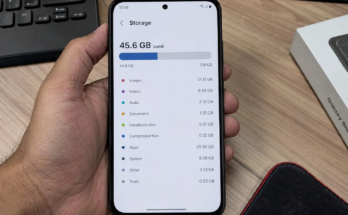
RAM is different from your phone storage. Storage is used to keep your photos, videos, apps, documents, and other files. RAM is mainly used while the phone is running.
More RAM can help a smartphone keep more apps available in the background. However, having extra RAM does not automatically make every phone faster.
How Much RAM Does a Smartphone Need?
For most smartphone users, 6GB to 8GB of RAM is enough. This amount provides a good balance between performance, multitasking, and price.
A phone with 4GB of RAM can still work well for basic tasks, especially when the software is properly optimized. However, 4GB may feel limited if you regularly use many applications or play modern games.
For most people buying a new smartphone today, 8GB of RAM is a safe choice. It provides enough memory for everyday activities and allows you to use multiple apps without constantly closing them.
Users who want a premium experience may choose 12GB or more. This can be useful for heavy gaming, video editing, demanding applications, and long term use.
Is 4GB RAM Enough?
A smartphone with 4GB RAM can be suitable for basic users. If you mainly use your phone for calling, messaging, browsing websites, watching videos, checking email, and using simple social media apps, 4GB may be enough.
However, you should not expect excellent multitasking from every 4GB phone. If you open many apps at the same time, the phone may need to reload some applications when you return to them.
Another important factor is software optimization. A well optimized smartphone with 4GB RAM can sometimes feel smoother than a poorly optimized phone with more RAM.
If you are buying a very affordable smartphone, 4GB RAM can be acceptable. But if you plan to keep your phone for several years, choosing 6GB or 8GB RAM may be a better decision.
Is 6GB RAM Enough for Everyday Use?
For many people, 6GB RAM is a very good option. It can handle common smartphone activities without major problems.
You can use social media apps, messaging apps, browsers, video streaming services, music apps, and other everyday applications. You can also switch between several apps without experiencing too many reloads.
A smartphone with 6GB RAM is often a good choice for users who want decent performance without paying for unnecessary specifications.
If your budget is limited but you still want a comfortable smartphone experience, 6GB RAM can be a practical choice.
Is 8GB RAM the Best Choice?
For many users, 8GB RAM is currently one of the best choices. It offers enough memory for everyday use, multitasking, gaming, and demanding applications.
With 8GB RAM, you can keep several apps open and switch between them comfortably. It is also useful if you frequently use your smartphone for work or study.
Another advantage of choosing 8GB RAM is future usability. Smartphone apps and operating systems continue to become more advanced. A phone with 8GB RAM can give you more room as applications become more demanding.
If you are unsure which RAM size to choose, 8GB is a simple and reliable option for most people.
Do Gamers Need More RAM?
Mobile gamers may benefit from having more RAM, especially when playing graphics intensive games. Modern games can require significant memory, particularly when combined with other apps running in the background.
For casual gaming, 6GB or 8GB RAM is usually enough. If you play demanding games regularly, 8GB RAM can provide a comfortable experience.
Serious mobile gamers may consider 12GB RAM or more. However, RAM is not the only factor that affects gaming performance. The processor, graphics performance, cooling system, display refresh rate, and software optimization are also very important.
A phone with 16GB RAM but a weak processor will not automatically become a great gaming phone.
Does 12GB RAM Make a Smartphone Faster?
A phone with 12GB RAM can be excellent for heavy users, but it does not mean that the phone will always be faster than an 8GB phone.
RAM mainly helps with multitasking and keeping applications available in the background. If your daily activities do not require much memory, you may not notice a major difference between 8GB and 12GB RAM.
For example, if you mostly use messaging apps, social media, YouTube, and web browsing, 12GB RAM may be more than you need.
However, if you use demanding applications, edit videos, play large games, or frequently switch between many apps, the extra RAM can become more useful.
What About 16GB RAM?
Some high end smartphones now offer 16GB RAM or more. These phones are designed for users who want maximum performance and heavy multitasking capabilities.
For the average smartphone user, 16GB RAM is usually unnecessary. Most people will not use enough applications at the same time to take full advantage of that amount of memory.
If you are buying a premium smartphone and the price difference is small, extra RAM can provide some additional headroom. But it should not be the main reason to choose a phone.
It is often better to consider the complete package, including the processor, battery, camera, display, software support, and storage.
RAM and Smartphone Storage Are Different
One common mistake is confusing RAM with storage. They are completely different things.
If a phone has 8GB RAM and 256GB storage, the 8GB refers to temporary working memory while the 256GB refers to space for your files and applications.
If you take lots of photos and videos, storage becomes very important. If you frequently multitask between applications, RAM becomes more important.
Both specifications matter, but they solve different problems.
Does More RAM Improve Battery Life?
More RAM does not automatically mean better battery life. In some situations, having enough RAM can help your phone manage applications more efficiently, but battery life depends on many other factors.
The processor, display, network connection, battery capacity, software optimization, and the apps you use all affect battery consumption.
A phone with excellent software optimization and a good processor may provide better battery life than a phone with more RAM but inefficient hardware.
This is why you should not choose a smartphone based only on its RAM specification.
How Much RAM Should You Buy?
The right amount of smartphone RAM depends on your personal needs.
If you are a basic user, 4GB to 6GB RAM can be enough. You can use messaging, social media, browsing, streaming, and other simple applications.
For the average user, 8GB RAM is an excellent choice. It provides smooth multitasking and enough performance for most everyday activities.
For heavy users, 12GB RAM can be a good option. It is useful for gaming, video editing, productivity applications, and demanding multitasking.
For enthusiasts and users who want the highest specifications, 16GB RAM can provide additional memory headroom. However, it is not necessary for most people.
Other Smartphone Specifications Matter Too
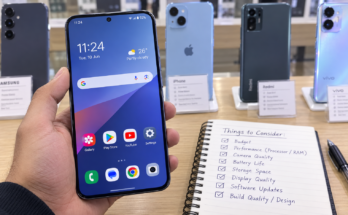
When buying a new smartphone, do not focus only on RAM. A good smartphone needs a balanced combination of hardware and software.
The processor is extremely important because it controls overall performance. Storage type also matters because faster storage can improve app loading and file transfer speeds.
Battery capacity is important for users who spend many hours on their phones. The display affects both the viewing experience and battery consumption. Camera quality matters if photography is important to you.
Software updates should also be considered. A phone that receives regular updates can remain useful for a longer period.
Final Thoughts
So, how much RAM does a smartphone really need? For most people, 8GB RAM is the sweet spot. It provides enough performance for everyday use, multitasking, gaming, and modern applications without paying extra for memory that you may never use.
Budget users can consider 4GB or 6GB RAM, while heavy users may prefer 12GB. Phones with 16GB RAM can be attractive for enthusiasts, but most people do not need that much memory.
The most important thing is to choose a smartphone based on your actual needs. More RAM is useful only when your usage can take advantage of it. Instead of choosing a phone simply because it has a bigger RAM number, look at the processor, software, battery, storage, display, camera, and overall quality.
If you are buying a new smartphone, 8GB RAM is generally a safe and practical choice that should provide a smooth experience for most users for years to come.